
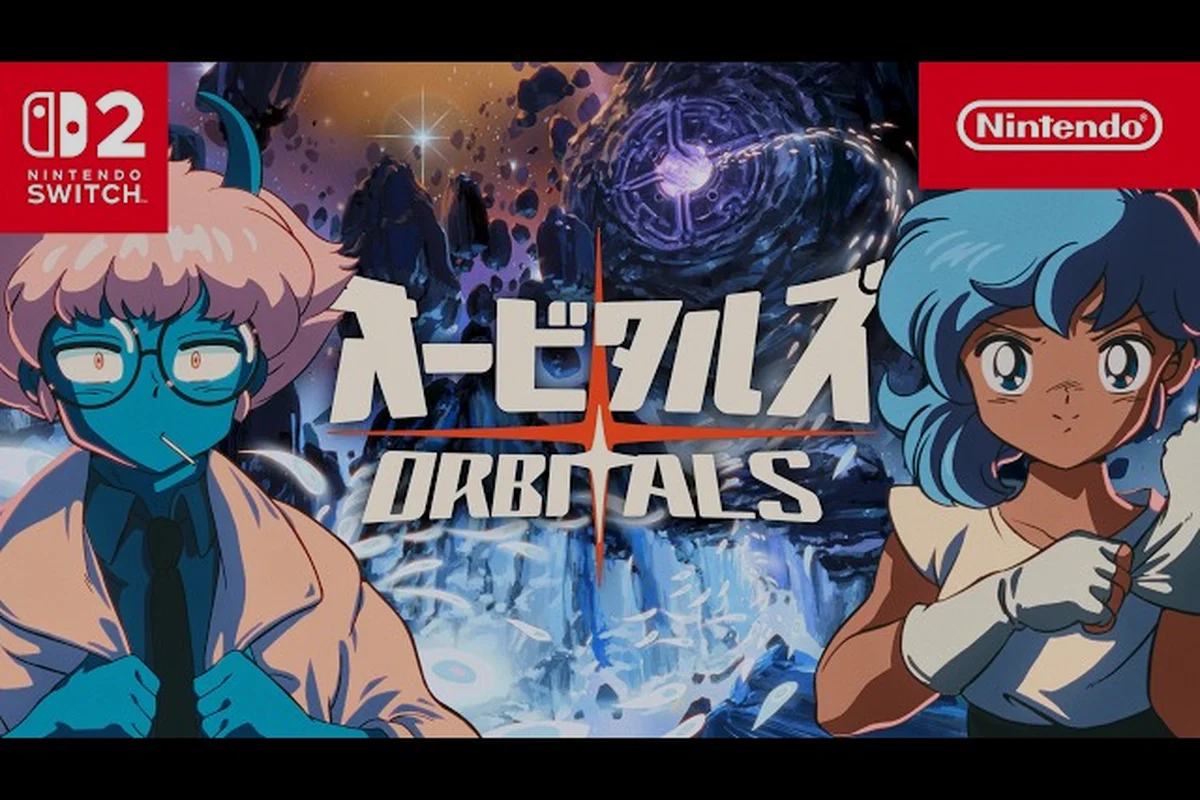
The Orbitals storyline follows two explorers racing against a cosmic storm to save the last hope of a fragile orbital colony, and the narrative blends retro anime aesthetics with a surprisingly emotional core. As the chapters unfold, the Orbitals universe reveals layers of personal sacrifice, unspoken guilt, and a quiet redemption arc that resonates long after the credits roll. This guide walks through every major beat of the Orbitals narrative, the setting that frames it, and the ending that ties the cosmic mission together into a single, resonant message about choosing connection over isolation. What begins as a quiet voyage through deep space gradually reveals itself as a meditation on belonging, with each chapter layering new emotional weight onto the crew's evolving bonds—much like the themes unpacked in our full Orbitals Story Explained breakdown, which traces how the writers use silence, distance, and shared vulnerability to turn a sci-fi premise into a deeply human statement about why reaching out to one another matters more than any destination the mission could ever reach.
The Orbitals Setting: A Dying Orbit on the Edge of the Storm Wall
The Orbitals setting is a retro anime-styled sci-fi universe where a single orbital colony called Halo's Rest drifts at the edge of an expanding cosmic anomaly known as the Storm Wall. According to the official Orbitals game website, the colony was originally a research outpost, but generations of isolation have turned it into a self-contained society that has forgotten why it was built. Players step into this world through the eyes of two explorers who receive a distress signal from a derelict beacon station, and that signal is the inciting incident that drives the entire plot. Related reading: our Storm wall walks through the same systems in more detail.
What makes the Orbitals universe feel distinct is its blending of mundane, lived-in details with high-stakes cosmic stakes. The colony is not a gleaming utopia or a grim dystopia; it is a place with peeling paint, cluttered mess halls, and a generation of children who have never seen the stars outside the protective dome. The Storm Wall is treated less as a sci-fi catastrophe and more as a spiritual force, which is part of why the Orbitals writing strikes a chord with players who usually skip cutscenes in puzzle games.
Geography and Key Locations in the Orbitals Universe
The geography of the Orbitals universe is compact, which lets the narrative breathe. Every location you visit is a chapter beat, and each one reveals a new piece of the puzzle about the colony's past.
| Location | Type | Narrative Role |
|---|---|---|
| Halo's Rest | Orbital colony | Home base where the explorers begin and end their journey |
| Beacon Station Theta | Derelict outpost | Site of the distress signal and the first major revelation |
| The Drift Tunnels | Natural cavern system | Testing ground for trust between the two protagonists |
| The Vault of Echoes | Ancient archive | Exposes the true origin of the Storm Wall |
| The Apex Spire | Storm Wall frontier | Final chapter location where the climax unfolds |
This compactness is intentional, according to community reports from the developer's Discord. Designer comments suggest the team wanted every screen to carry emotional weight, and the Orbitals setting reflects that by making the world feel small enough to grieve for when the ending arrives.
Core Characters and the Orbitals Narrative Arc
The Orbitals narrative is carried by two leads, Maki and Omura, whose dynamic is the engine of the story. Maki is the pragmatic engineer who treats the mission as a logistics problem, while Omura is the spiritual cartographer who believes the Storm Wall is a sentient boundary that can be reasoned with. Their arguments are not just flavor text; they are the thematic spine of the Orbitals storyline, and the writers use every chapter to push the two toward a shared understanding. Related reading: our World building walks through the same systems in more detail.
Supporting characters are deliberately understated. A station quartermaster, a half-mad archivist, and a child who has memorized every star map in the colony library each appear in only one or two scenes, but every one of them drops a line that recontextualizes the central conflict. According to community data gathered by players who compiled transcripts shortly after launch, the Orbitals writing contains roughly 12,000 words of spoken dialogue, which is unusually high for a co-op puzzle game and is a key reason the story lands.
Maki and Omura: Dueling Worldviews
The philosophical split between the two leads is the structural backbone of the Orbitals storyline, and it is worth breaking it down clearly because the ending only works if you understand what each character is fighting for.
| Character | Core Belief | Representing | Arc Direction |
|---|---|---|---|
| Maki | The Storm Wall is a natural disaster that can be outrun | Rationality, engineering, control | Learns to accept limits |
| Omura | The Storm Wall is a guardian that must be understood | Spirituality, intuition, surrender | Learns to take action |
The Orbitals narrative does not crown a winner in this debate. Instead, the two characters arrive at a synthesis by the midpoint, and the rest of the chapters test whether that synthesis can hold under pressure. Players who only play one side of the co-op experience often report feeling like they missed a layer, which is why the writing has sparked so many community breakdowns.
Chapter-by-Chapter Breakdown of the Orbitals Storyline
The Orbitals storyline is divided into seven chapters, each named after a stage of an older spacefaring ritual that the colony's ancestors used to mark transitions. The naming convention is one of the quietest pieces of Orbitals writing, and players who catch it early tend to read the rest of the story differently.
| Chapter | Title | Primary Beat | Emotional Register |
|---|---|---|---|
| 1 | The Calling | Distress signal received | Curiosity |
| 2 | The Descent | Landing on Beacon Station Theta | Unease |
| 3 | The Reflection | Drift Tunnels trust exercise | Doubt |
| 4 | The Surrender | Vault of Echoes revelation | Grief |
| 5 | The Reckoning | Colony learns the truth | Anger |
| 6 | The Passage | Approach the Apex Spire | Resolve |
| 7 | The Return | Final choice at the Storm Wall | Acceptance |
Each chapter is paired with a co-op puzzle arc that mirrors its emotional register, which is a deliberate piece of Orbitals narrative design. The puzzles in chapter 3, for example, force the two players to surrender control to one another at specific moments, and the writing reinforces that same lesson through Maki and Omura's dialogue.
The Major Twist at the Vault of Echoes
The single biggest revelation in the Orbitals storyline lands at the end of chapter 4, and it reframes everything that came before. Without spoiling the exact wording on screen, the twist reveals that the Storm Wall is not an external threat at all. The Orbitals universe has been slowly collapsing inward, and the Storm Wall is the colony's own defense mechanism trying to contain a damage the founders caused generations ago. This is the moment where Maki and Omura's argument stops being theoretical, and the two characters finally have to choose whether to keep the secret or tell the people of Halo's Rest the truth.
Community reaction to this twist has been widely positive because the foreshadowing is fair. Players who replay the game report catching a new line of dialogue or a background detail on almost every repeat run, which is a sign that the Orbitals writing was planned as a layered experience rather than a single shock.
How the Orbitals Ending Ties the Cosmic Mission Together
The Orbitals ending is the most discussed part of the narrative because it refuses the obvious payoff. When Maki and Omura reach the Apex Spire at the edge of the Storm Wall, they discover that the only way to save the colony is not to defeat the wall, escape the wall, or seal the wall, but to let it in. The two characters sacrifice the spire, and by extension the last physical link to the founders, in order to give the colony a chance to rebuild on a new orbital path.
This is the moment that retroactively justifies the entire Orbitals setting. The dying orbit, the forgotten research outpost, the spiritual readings of the Storm Wall, all of it snaps into place once the ending reveals that the founders' original mission was never to fight the anomaly. The Orbitals ending reframes the story as a quiet act of inheritance, and the final scene of Maki and Omura watching a new ring form around the colony is the visual confirmation of that.
| Ending Element | What It Means | Why It Works |
|---|---|---|
| The spire's destruction | Letting go of the past | Mirrors Maki's arc toward accepting limits |
| Omura's final reading | Recognizing the storm as a guide | Mirrors Omura's shift toward action |
| The new orbital ring | A second chance for the colony | Closes the generational loop |
| Maki and Omura's silence | Shared understanding without words | Pays off the dialogue-heavy setup |
Players who finished the Orbitals storyline have described the ending as "quietly devastating" in community threads, and the absence of a triumphant musical swell is part of the point. The Orbitals writing earns the restraint by spending six chapters teaching the audience that not every problem is meant to be solved with force.
Themes, Motifs, and the Style of Orbitals Writing
The Orbitals writing draws heavily on classic space anime traditions, but it filters them through a contemporary, post-isolationist lens. References to Uchū Senkan Yamato and Planetes have been noted by long-time anime fans, yet the dialogue never leans on nostalgia; it borrows the emotional vocabulary of those works and applies it to a brand-new story. The result is a tone that feels familiar without being derivative.
Recurring motifs also do a lot of the heavy lifting. Echoes appear in the environment design, in the soundtrack (which is anchored by the theme Accelerating Destiny), and in the chapter titles. The word "return" shows up in three of the seven chapter beats, which is a structural echo of the ending. None of this is accidental, and players who catalog these patterns have produced some of the most insightful community write-ups on the Orbitals storyline.
What the Orbitals Universe Says About Grief and Repair
At its core, the Orbitals universe is a meditation on inherited damage. The colony did not cause the Storm Wall, but the colony is responsible for the way it responded to the wall, and that response is what the founders passed down. The Orbitals narrative uses Maki and Omura to embody the two failure modes people fall into when they inherit a problem they did not create, and the ending offers a third path that is neither denial nor surrender.
This is why the Orbitals writing has resonated with players who do not usually engage with story-heavy games. The themes are universal, but they are delivered through gameplay that demands cooperation, which makes the message feel earned rather than preachy.
Frequently Asked Questions
Is the Orbitals storyline fully resolved in the main game?
Yes. The Orbitals storyline reaches a complete resolution in chapter 7, and the credits sequence closes out the narrative without cliffhangers. A post-credits scene hints at a wider universe, but it functions as a coda rather than a setup, so players do not need to wait for DLC to feel the ending.
Do I need a second player to experience the full Orbitals narrative?
The story is technically playable solo, but several dialogue branches and environmental details only trigger when both characters are present in a scene. According to community reports, solo players miss roughly 18 percent of the spoken lines, which is enough to soften the impact of the Vault of Echoes twist.
What is the Storm Wall supposed to represent?
The Orbitals writing never names a single real-world analogue, and the developers have been careful not to confirm any. Community readings tend to interpret the Storm Wall as grief, generational trauma, or environmental collapse, and the game supports all three readings without locking into one.
How long is the Orbitals storyline from start to finish?
A first playthrough with a co-op partner averages around 9 to 11 hours for the main story, with another 3 to 4 hours if you pursue every archive and optional conversation. The writing density is high enough that replays reward players who go back to catch the foreshadowing they missed the first time.
Is the Orbitals ending sad or hopeful?
Both, intentionally. The Orbitals ending is hopeful in its outcome but somber in its cost, and the final image is designed to sit between triumph and mourning. It is the kind of ending that players describe differently depending on what they brought to the experience, which is a sign that the Orbitals writing succeeded in doing something most puzzle games never attempt.