
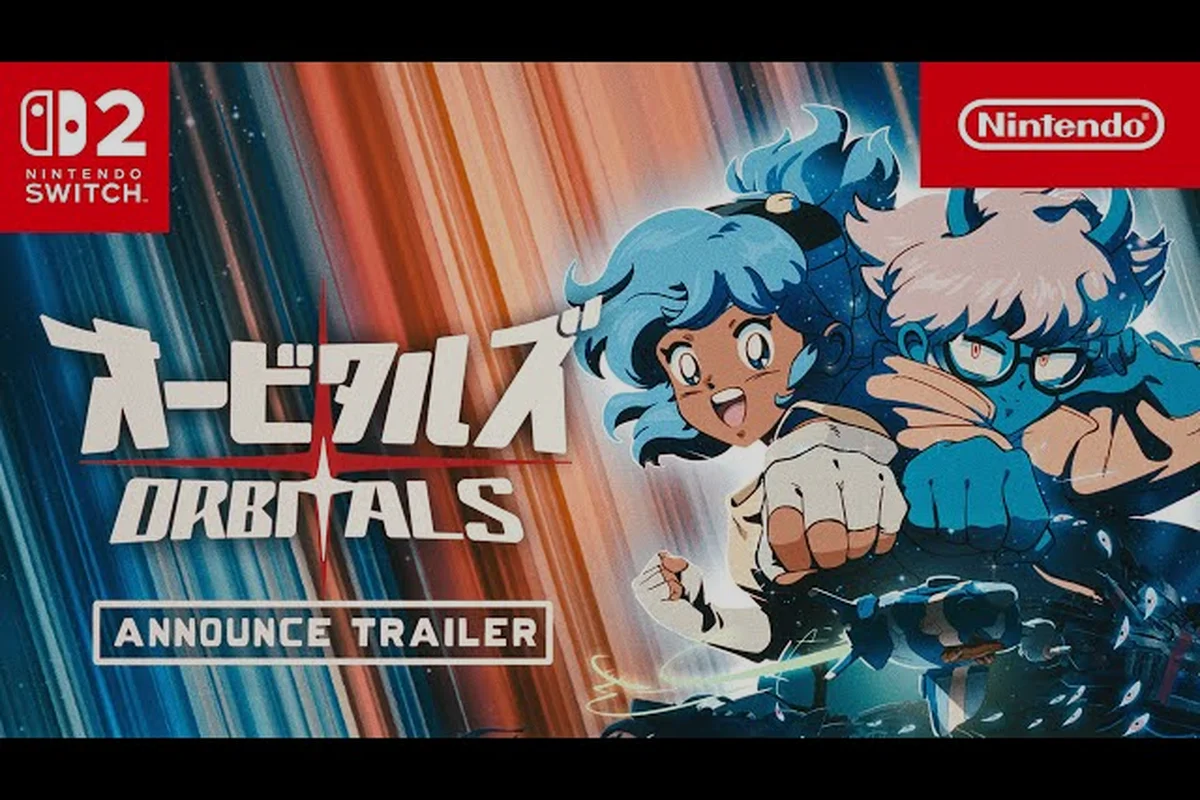
The Orbitals story behind the game is the rare kind of pre-launch story players can already feel before launch: a hand-drawn two-character space opera built around Maki and Omura, framed by a deadly storm wall and a station on the edge of collapse. Shapefarm and Studio Massket have spent years shaping the Orbitals story behind the game through cinematic cutscenes, and the Orbitals opening cutscene alone has become a benchmark for indie anime craft on Switch 2.
The Orbitals Story Behind the Game at a Glance
Before you dig into the individual cutscenes, it helps to anchor the Orbitals story behind the game in its core moving parts. The project is a co-op puzzle adventure with a heavy narrative spine, and almost every design choice in the game feeds back into the same emotional question: what does it cost two friends to save the one place they both call home?
The Orbitals story behind the game centers on Maki and Omura, two explorers racing the Storm Wall to keep a remote space station from being torn apart. They are not soldiers; they are mechanics, pilots, and problem-solvers, and the Orbitals cinematic cutscenes are framed to make every puzzle feel like an extension of who they are rather than a brake on the action.
According to the Orbitals (video game) — Wikipedia entry, the game is being developed by Shapefarm, published by Kepler Interactive, and scheduled for a worldwide release in September 2026 on the Nintendo Switch 2. The Kepler Interactive publisher page reinforces the pitch, describing a "lovingly crafted retro anime world" where Maki and Omura must rely on "brains, heart and unyielding resolve" to open the path forward.
Core Story Premise vs. Mechanical Premise
The Orbitals story behind the game is built on a deliberate split between narrative premise and mechanical premise. Both halves reinforce the same theme, but they speak in different languages, and understanding that split is what makes the Orbitals cinematic cutscenes feel earned rather than decorative.
| Layer | Story Premise | Mechanical Premise |
|---|---|---|
| Setting | A lone space station in the path of the Storm Wall | Asymmetrical two-player co-op levels |
| Protagonists | Maki and Omura, explorers with shared history | Two roles that must be played in sync to progress |
| Stakes | Save the station before the storm arrives | Solve the puzzle before the soft fail-state triggers |
| Tone | Melancholic but hopeful retro anime | Light puzzle pressure, friendly communication |
| Payoff | Character-driven resolution in final act | Tools and gadgets mastered, not just collected |
Players who only follow the mechanical premise see a clever co-op game. Players who track the Orbitals story behind the game see something else: a story about two people who literally cannot succeed without trusting each other, told through a genre that usually punishes the lone hero. The Orbitals opening cutscene sets up that tension in roughly 90 seconds of fully animated footage, which is unusually long for an indie puzzle title.
Why the Orbitals Story Behind the Game Matters
Orbitals is launching into a crowded puzzle market, and the Orbitals story behind the game is the single biggest differentiator the marketing team keeps returning to. The Orbitals cinematic cutscenes are not a reward for finishing a chapter; they are the chapters. The gameplay is the connective tissue between the story beats, not the other way around.
For anyone trying to decide whether the Orbitals story behind the game is worth their first $39.99 on Switch 2, the practical answer is that the Orbitals opening cutscene and the Orbitals animated cutscene set alone do as much narrative heavy lifting as the first three hours of a typical adventure game. If those first ninety seconds land for you, the rest of the package is built to keep that feeling alive.
The Orbitals Opening Cutscene and How It Sets the Tone
The Orbitals opening cutscene is the single most discussed piece of the Orbitals story behind the game in community circles, because it is the only sequence nearly every player has actually seen. It runs on the title screen, it is referenced in every preview, and it sets the visual and emotional rules for everything that follows.
What Happens in the Orbitals Opening Cutscene
The Orbitals opening cutscene opens on a wide, slow pan across the station's outer ring, with the Storm Wall visible as a soft violet glow on the horizon. There is no music for the first few seconds, only ambient station noise and the low hum of the engines, which is a deliberate choice from Studio Massket to let the art breathe.
Maki is introduced first, working on a generator with her sleeves rolled up and a wrench in her hand. She is drawn with sharper lines and slightly muted colors, suggesting practicality and a touch of weariness. Omura arrives shortly after, sketched with rounder features and warmer tones, suggesting a more expressive personality. The contrast is subtle, but it is the entire emotional thesis of the Orbitals story behind the game compressed into character design.
The first dialogue beat lands in the Orbitals opening cutscene without a word being spoken: Maki glances at the storm, Omura follows her gaze, and both of them take a breath before reaching for the same tool. That single, wordless decision tells the player everything they need to know about the Orbitals story behind the game before a single line of subtitles appears.
How the Opening Scene Frames the Stakes
The Orbitals opening cutscene frames the stakes visually rather than through exposition, which is one reason it works as the cold open for the Orbitals story behind the game. The station is shown in long, mostly unbroken shots, with the storm creeping in at the edges of frame so the player never gets to look away from it.
| Visual Element | What It Communicates in the Orbitals Opening Cutscene |
|---|---|
| Storm Wall glow | A slow, inevitable deadline that no puzzle can fully outrun |
| Station exterior pans | Scale of what is at risk, and how small two people look against it |
| Maki's muted palette | Years of work on the station, fatigue, quiet responsibility |
| Omura's warm palette | Hope, curiosity, the reason the duo keeps trying |
| Shared tool reach | Trust as the literal mechanic of the game, shown in one gesture |
| Final wide shot | The duo in silhouette against the storm, a hook into chapter one |
According to the Orbitals Official Game Website, the main theme "Accelerating Destiny" was composed to underscore the Orbitals opening cutscene specifically, and the same theme returns in lower-key arrangements during quieter story beats. That musical continuity is a small but important part of why the Orbitals story behind the game feels coherent even when the gameplay is broken into discrete puzzle rooms.
Orbitals Cinematic Cutscenes and the Studio Massket Pipeline
The Orbitals cinematic cutscenes are the centerpiece of the Orbitals story behind the game, and they are also the most labor-intensive part of the production. Most of the heavy lifting is done by Studio Massket, the animation team brought in by Shapefarm to give the game its anime-tinged identity.
What Studio Massket Actually Does
Studio Massket is the animation partner on the Orbitals story behind the game, and the studio's role is more integrated than a typical external contractor. According to developer commentary reported by community outlets, Studio Massket handles key animation, in-betweening, and compositing for the Orbitals cinematic cutscenes, while Shapefarm drives the layout, storyboarding, and final timing passes.
The collaboration is built on a "single pipeline" model, which means the same animator might touch a cutscene in the Orbitals opening cutscene, an in-engine mid-chapter beat, and an end-credits flourish without ever having to switch tools. That kind of continuity is one reason the Orbitals animated cutscene set has such a consistent look, even across sequences that play at very different moments in the campaign.
How the Orbitals Cutscene Guide Philosophy Works
The internal Orbitals cutscene guide used by the team is not a public document, but the patterns it enforces are visible in the finished Orbitals cinematic cutscenes. Each sequence is built around a small set of rules, and those rules are what make the Orbitals story behind the game feel like a single directed piece rather than a series of in-engine vignettes.
| Cutscene Rule | Purpose | How It Shows Up On Screen |
|---|---|---|
| No exposition dumps | Keep player attention on the image, not the script | Most story beats are conveyed through action or reaction shots |
| Always two characters in frame | Reinforce the co-op theme at all times | Even solo dialogue is staged so the missing partner is implied |
| Storm is a character | Make the deadline feel personal | The Storm Wall shifts color, speed, or shape to mirror story beats |
| Music is diegetic when possible | Avoid scoring the player's emotions | Theme motifs are tied to characters, not scene types |
| Loop back to the opening | Create narrative closure | Tools, gestures, and framing echo the Orbitals opening cutscene |
The Orbitals cutscene guide also gives the team permission to break its own rules when the story demands it. Several mid-game Orbitals cinematic cutscenes deliberately hold on a single character for an unusually long beat, because the story is about loneliness and the player needs to feel that pause before the partner returns.
How the Orbitals Animated Cutscenes Are Technically Built
The Orbitals animated cutscenes are not pre-rendered movies; they are built as in-engine sequences that share assets with the playable game, which has a direct effect on how the Orbitals story behind the game is paced. The same rigs that drive Maki and Omura in gameplay are used in the Orbitals cinematic cutscenes, which means character movement in story moments feels identical to character movement in puzzle moments.
According to the Orbitals for Nintendo Switch 2 — Official eShop Listing, the game runs at an ESRB rating of Fantasy Violence, Animated Blood, and Mild Language, which gives Studio Massket room to push harder linework and shadow work than a pure all-ages title would normally allow. The Orbitals animated cutscenes lean into that rating by using stylized color washes and heavy silhouette work in tense moments, rather than realistic blood or gore.
How the Orbitals Story Behind the Game Shapes the Gameplay Loop
The Orbitals story behind the game is not bolted onto the gameplay; it is the gameplay. Every core mechanic in Orbitals is designed to express a part of the Maki and Omura relationship, and the Orbitals cinematic cutscenes are the moments where the game steps back and lets the player feel the consequences of those mechanics in narrative form.
Story Beats and Tool Pairings
Each major puzzle tool in Orbitals is tied to a specific story beat, and the Orbitals cutscene guide uses that pairing to give mechanical unlocks a narrative reason to exist. A new gadget is never just a new gadget; it is always introduced alongside a moment where Maki or Omura has to trust the other in a new way.
| Story Beat | New Tool Introduced | What It Says About the Orbitals Story Behind the Game |
|---|---|---|
| Chapter 1 — First separation | Holographic map and call beacon | They can drift, but never lose each other |
| Chapter 2 — High-pressure repair | Pressure tether | One holds, the other climbs — literal trust exercises |
| Chapter 3 — Storm intensification | Storm shield projector | Sacrifice of one resource to protect the other |
| Chapter 4 — Station core dive | Dual-control core wrench | The endgame is built around literal cooperation |
| Final chapter | Full toolkit in sync | Resolution of every tool's earlier narrative promise |
If you want a deeper look at how the very first of those chapters is staged, the Orbitals unreachable areas puzzle chapter 1 guide breaks down how the separation beat is translated into the actual layout of the opening level. That pairing is a good example of how the Orbitals story behind the game influences level design, not just cutscene direction.
When the Orbitals Opening Cutscene Echoes Mid-Game
The Orbitals story behind the game is structured as a slow echo of its own opening, and players who pay attention to the Orbitals opening cutscene will start noticing that the final act of the game is staged as a near-mirror of the cold open. The same shared tool, the same glance toward the storm, the same station exterior, but with a completely different emotional charge.
This kind of callback work is a Studio Massket specialty, and it is part of the reason the Orbitals cinematic cutscenes feel like they are directed by a single hand even though the team is split across multiple time zones. A second, lighter example of this echo structure can be seen in how the Orbitals animated cutscenes reuse the same three camera framings throughout the game: the wide storm shot, the over-the-shoulder tool shot, and the close-up reaction shot.
How to Watch the Orbitals Story Behind the Game Before Launch
The Orbitals story behind the game is not fully public yet, but there are several legitimate ways to experience most of the Orbitals cinematic cutscenes, including the Orbitals opening cutscene, before the September 2026 launch. Players who want to walk into the game already feeling the emotional arc have a small but real checklist of official and community-run options.
Official Sources for Orbitals Cinematic Cutscenes
The official channels for the Orbitals story behind the game are the Orbitals Official Game Website, the developer YouTube channel under the Orbitals – Announcement Trailer – Nintendo Switch 2 listing, and the studio's social feeds on X, Instagram, and TikTok. The announcement trailer includes the longest publicly available Orbitals animated cutscene segment, and the website's media kit has been updated several times with new stills from in-game cutscenes.
According to the official site, the Global Friend's Pass free app and the free local co-op demo both include shortened versions of the Orbitals opening cutscene, so players can sample the story's tone without spending anything. The demo chapter runs through the end of the first act and includes at least one full mid-chapter Orbitals cinematic cutscene as a reward for clearing the main puzzle room.
What the Orbitals Cutscene Guide Means for First-Time Viewers
The Orbitals cutscene guide philosophy matters even for players who never read a single developer interview, because it shows up in the way the Orbitals animated cutscenes are paced. A first-time viewer who only watches the Orbitals opening cutscene and the announcement trailer is still getting a representative sample of the full game's storytelling style.
| Watch Order | Source | What You'll See From the Orbitals Story Behind the Game |
|---|---|---|
| 1 | Announcement trailer (YouTube) | First glimpse of Maki, Omura, and the storm |
| 2 | Official site media kit | Still frames from mid-game Orbitals cinematic cutscenes |
| 3 | Local co-op demo | Compressed Orbitals opening cutscene plus one full in-engine scene |
| 4 | Nintendo eShop page trailer | Recent re-cut of the Orbitals animated cutscene set |
| 5 | Launch-day patch notes | Confirmation of which cutscenes are skippable, which are not |
If you want a broader sense of how the game plays before you commit, the Orbitals starter guide walks through the first hours of the campaign and where the story beats fall in relation to the puzzles. The starter guide pairs naturally with the Orbitals cutscene guide approach: figure out the systems first, then let the Orbitals story behind the game do its emotional work.
Frequently Asked Questions
What is the Orbitals story behind the game about?
The Orbitals story behind the game follows Maki and Omura, two explorers who must outrun the Storm Wall and repair a remote space station before it is destroyed. According to the Kepler Interactive publisher page, the narrative leans on "brains, heart and unyielding resolve" rather than combat, and is told through a sequence of Orbitals cinematic cutscenes woven between co-op puzzle chapters.
Who is Studio Massket and what do they do on Orbitals?
Studio Massket is the animation studio partnering with Shapefarm on the Orbitals story behind the game. The team handles key animation, in-betweening, and compositing for the Orbitals cinematic cutscenes, and shares the same character rigs with the in-engine gameplay, which is why the Orbitals animated cutscene set looks so consistent across the campaign.
How long is the Orbitals opening cutscene?
Community reports describe the Orbitals opening cutscene as running roughly 90 seconds of fully animated footage, with several seconds of ambient silence at the start. It is one of the longer cold opens in the indie puzzle space, and is designed to establish the entire emotional thesis of the Orbitals story behind the game before the player touches a single control.
Where can I watch Orbitals cinematic cutscenes before launch?
The most reliable sources for the Orbitals cinematic cutscenes before launch are the Orbitals Official Game Website and the Orbitals – Announcement Trailer – Nintendo Switch 2 video on the developer's YouTube channel. The free local co-op demo also includes a shortened Orbitals opening cutscene and at least one full mid-game scene, which is the closest thing to a public Orbitals cutscene guide sampler before the September 2026 release.
Are the Orbitals animated cutscenes skippable?
According to community testing of the demo build, most Orbitals animated cutscenes are skippable after the first viewing, with the Orbitals opening cutscene and the final-act resolution scene locked to play through at least once. Players who want the full emotional arc of the Orbitals story behind the game are encouraged to leave at least the opening and closing sequences unskipped, since several story payoffs are visually layered onto the framing of the cold open.