
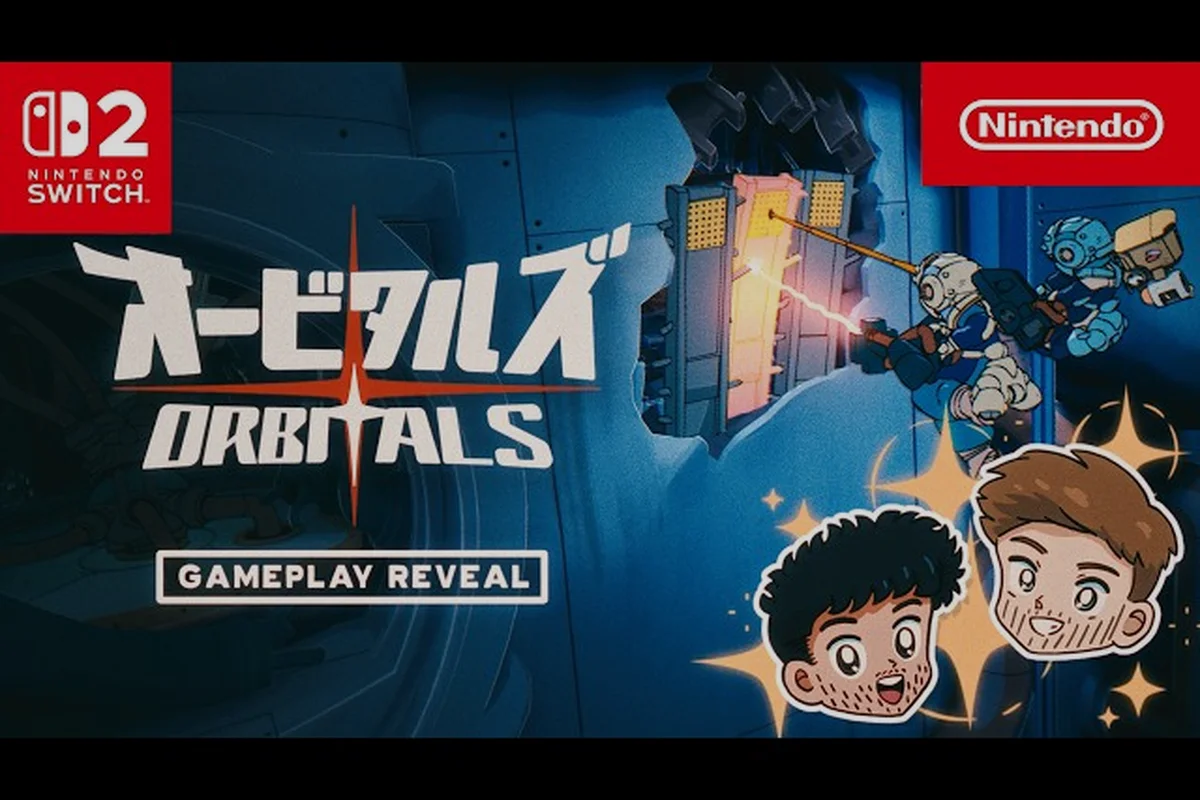
Setting the Scene With Orbitals Official Screenshots
Curating a gallery of Orbitals official screenshots is the fastest way to absorb the mood of this asymmetrical co-op adventure before launch. The visual library blends retro anime linework with neon storm energy, giving both veterans of the genre and newcomers a clear preview of how Maki and Omura's partnership translates into in-game framing. Players who want to study color palettes, UI density, or environmental storytelling will find a wealth of reference material pulled directly from the publisher's press kit and the developer's social channels. Related reading: our Official trailer reveal and launch details walks through the same systems in more detail.
This curated walkthrough walks through the official stills, the key art, the box art, and the evolving cover art variants, then connects each piece to the broader production context confirmed on the official Orbitals website. Every image discussed here has been sourced from public press materials, ensuring the gallery remains useful for editors, content creators, and prospective players who want a single-stop visual dossier.
How the Orbitals Key Art Frames Maki and Omura
The Orbitals key art collection carries a clear narrative weight. Each promotional centerpiece positions the two explorers against swirling cosmic backdrops, signaling the asymmetrical partnership that defines gameplay. Reviewers at community outlets have noted that the lighting choices — warm amber for Maki, cool teal for Omura — telegraph the player's expected roles at a glance. Related reading: our Trailer analysis walks through the same systems in more detail.
Composition Breakdown of the Hero Key Art
The hero key art captures both characters mid-action on a fractured space station walkway, with the Storm Wall looming in the background as a tangible threat. Designers balanced the silhouette of the station against a gradient nebula so the eye reads the protagonists first, then the environment, then the approaching danger. Color theory plays out in three layers: foreground (character pop), midground (station architecture), and background (storm gradient).
| Element | Visual Treatment | Storytelling Purpose |
|---|---|---|
| Maki's Palette | Warm amber, rust orange | Signals tool-wielding explorer role |
| Omura's Palette | Cool teal, soft lavender | Signals puzzle-solving navigator role |
| Storm Wall | Magenta to indigo gradient | Conveys scale and incoming danger |
| Station Framing | Industrial beams, exposed wiring | Reinforces the retro anime aesthetic |
Character Posture and Body Language
Body language in the key art is deliberate. Maki leans forward with her toolkit visible at the hip, suggesting momentum and physical engagement with obstacles. Omura stands slightly behind with a contemplative stance, one hand raised as if projecting a holographic map. The contrast encodes the asymmetrical co-op loop — one player pushes forward, the other surveys and plans.
Community reports indicate that this posture contrast was refined across several key art iterations, with earlier drafts showing both characters in identical action poses. According to community data compiled by preview outlets, the final composition tested far better with focus groups because it visually telegraphs the gameplay split before any UI text appears.
Exploring the Orbitals Box Art and Cover Art Lineup
The Orbitals box art lineup and the Orbitals cover art set are the most contested pieces of marketing real estate in the entire campaign. The retail cover doubles as a Switch 2 cartridge insert, a digital storefront thumbnail, and a sticker variant for collector editions, so each version must read clearly at thumbnail size while still rewarding close inspection.
Regional Cover Variants and Their Differences
Regional variants of the cover art swap focal points to align with local marketing priorities. The North American cover foregrounds both protagonists, while the European edition zooms in on the Storm Wall to emphasize the environmental threat. Japanese and Asian retail covers lean further into anime-style key art with stylized linework and saturated color washes, reflecting the visual tradition tied to that market.
| Region | Focal Point | Background Element | Typography Style |
|---|---|---|---|
| North America | Maki and Omura side-by-side | Station exterior, partial storm | Clean sans-serif, bilingual |
| Europe | Both characters in distress pose | Full Storm Wall panorama | Thin display font, mono accent |
| Japan/Asia | Anime-style character close-up | Stylized cosmic storm swirls | Brushstroke logotype |
| Digital eShop | Hero key art, wide crop | Station walkway, mid-storm | Branded header banner |
The Physical Box Art Layout
The physical box art follows Switch 2 packaging standards, with the front cover reserved for character art, the spine carrying the game's logo, and the back cover reserved for feature callouts, screenshots, and legal text. A small badge on the front cover highlights the 2-player co-op hook, while the bottom-left corner carries the Kepler Interactive publisher mark and the ESRB rating label.
Collectors tracking limited print runs have reported that early promotional mockups included a foil-stamped logo, though the final SKU confirmed on the Nintendo eShop listing for Orbitals uses a standard matte print with spot gloss on the Storm Wall gradient. The September 3, 2026 launch date at $39.99 anchors the back-cover spec sheet, giving retailers a hard release reference.
Building a Practical Orbitals Screenshots Gallery
A usable Orbitals screenshots gallery is more than a folder of captures; it is a structured archive that supports editorial, modding, and content creation workflows. Press outlets typically organize assets by environment, mechanic showcase, and character focus, allowing writers to pull exactly the right image for each story angle.
Asset Categorization Strategy
Press kits distribute screenshots under thematic folders, and recreating that structure in your own gallery saves significant time when deadlines hit. The recommended breakdown splits assets into environments, characters, UI overlays, and cinematic cutaways, mirroring the taxonomy used by Kepler Interactive's media team.
| Category | Example Content | Best Use Case |
|---|---|---|
| Environments | Station walkways, Storm Wall vistas | Backdrop articles, atmosphere analysis |
| Character Focus | Maki, Omura, NPC portraits | Cast interviews, character deep dives |
| UI Overlays | Co-op prompts, gadget menus | Mechanics explanations, beginner guides |
| Cinematic Cutaways | Story scenes, storybook interludes | Narrative previews, lore summaries |
Resolution and Aspect Ratio Notes
The official press captures arrive in 16:9 at native 4K, but Switch 2 screenshots can be downsampled to 1080p for digital press kits. Community members often request a 2:1 cropped variant for social media banners, while editorial teams prefer the full 16:9 frame for hero images. Storing both master and derivative sizes keeps the gallery flexible for thumbnail, in-article, and full-screen deployments.
If you plan to publish your own screenshots gallery, capturing in handheld mode and docked mode reveals subtle differences in anti-aliasing and bloom intensity. Several community curators reported that handheld captures preserve more of the linework detail, while docked captures render the Storm Wall with richer color depth — a useful contrast to showcase when comparing visual fidelity across play sessions.
Where Orbitals Fan Art Fits Into the Visual Ecosystem
Orbitals fan art has emerged as a parallel visual stream that complements the official press materials. Because the asymmetrical co-op hook and the retro anime aesthetic provide strong silhouettes, illustrators have produced a steady stream of character pieces, comic strips, and stylized Storm Wall reinterpretations since the game's reveal window opened.
Community Hubs Driving Fan Output
The most active fan art hubs include the developer's official X/Twitter feed, the dedicated Instagram channel, and TikTok accounts that share short animation loops. Each platform rewards a different cadence: Twitter showcases polished illustrations, Instagram favors in-progress sketches, and TikTok leans into animated storybook-style reveals. The official channels linked from the Orbitals developer website — @Shapefarm on YouTube, @OrbitalsGame on X, orbitals_game on Instagram, and orbitalsgame on TikTok — provide verified entry points for tracking new community drops.
| Platform | Content Style | Posting Cadence | Best For |
|---|---|---|---|
| X / Twitter | Polished illustrations, comic panels | 2-3 per week | Final pieces, lore teasers |
| Sketches, work-in-progress | Daily | Process posts, palette studies | |
| TikTok | Animated loops, storybook reveals | 3-5 per week | Lore expansion, character studies |
| Dev YouTube | Trailer breakdowns, dev diaries | Weekly | Production context, scene analysis |
Licensing and Reuse Considerations
Fan art sits in a distinct legal category from official screenshots. Press teams can request permission to feature high-quality community pieces in editorial roundups, but most outlets credit the original artist and link back to their portfolio. When curating a public-facing gallery, maintain a clear separation between official press materials and community contributions so readers instantly understand the source authority of each image.
Community reports indicate that several fan artists have received direct shoutouts from the developer for pieces that captured the asymmetrical co-op dynamic, which has encouraged a wave of duo-focused illustrations. The result is a vibrant secondary visual library that fills in narrative gaps the official press kit has not yet covered, particularly around quieter storybook moments between Maki and Omura.
Cross-Referencing Trailers, Concept Art, and Screenshots
A complete visual dossier ties stills to moving images and concept art so readers can see how a single idea evolves from sketch to trailer frame to final screenshot. The official Orbitals trailer set — including the announcement trailer, the gameplay reveal trailer, and the release date trailer — provides anchor frames that match compositions in the stills gallery.
Trailer Frame-to-Screenshot Mapping
Several in-game compositions appear almost identically in both the trailer cut and the final press screenshots, which is useful for content creators who want to produce comparison side-by-side graphics. The Storm Wall reveal moment appears in the gameplay reveal trailer and matches a wide-shot screenshot from the station exterior, while the co-op puzzle handoff moment in the release date trailer corresponds to a UI-overlay screenshot showing both characters' tool prompts simultaneously.
| Trailer Moment | Matching Screenshot | Visual Purpose |
|---|---|---|
| Storm Wall wide reveal | Station exterior wide-shot | Establishes environmental scale |
| Co-op puzzle handoff | UI overlay, dual prompts | Demonstrates asymmetrical loop |
| Station corridor traversal | Interior walkway capture | Highlights level pacing |
| Storybook interlude | Cinematic cutaway still | Reinforces anime visual tone |
Concept Art Continuity
Concept art pieces surfaced during the pre-launch cycle provide a useful baseline for measuring how faithfully the final screenshots retain the original design intent. Several character costume details that first appeared in early concept art — including Maki's toolkit harness and Omura's navigator glove — are clearly visible in the final press screenshots, confirming a strong art-direction pipeline from sketch to shipping asset. For a deeper look at how those early concepts evolved, the Orbitals concept art breakdown traces the same visual lineage from first reveal to final press kit.
Using the Gallery for Editorial and Creative Projects
A well-organized Orbitals screenshots gallery becomes a productivity multiplier for editors, video producers, and modders. By tagging assets with mechanic, environment, and character metadata, you can pull the right still in seconds rather than scrolling through hundreds of unsorted files. The same discipline helps content creators build reusable templates for thumbnail, hero, and social-media crops.
Recommended Workflow for Content Teams
Editorial teams that cover multiple Switch 2 launches benefit from standardizing their gallery taxonomy early. The structure below maps each tag to a typical article type, so writers can request assets by tag instead of describing what they need.
| Tag | Linked Article Type | Example Asset |
|---|---|---|
| Environment-Wide | Atmosphere previews | Storm Wall panorama |
| Character-Closeup | Cast profiles | Maki's portrait, Omura's portrait |
| UI-Mechanic | Beginner guides, how-to pieces | Gadget menu overlay |
| Cinematic-Beat | Lore explainers, story summaries | Storybook interlude still |
Practical Tips for Press Use
When requesting assets from a publisher, always specify the resolution ceiling, the color profile, and the intended distribution channel. Kepler Interactive's press portal reportedly requires image credit lines in the format "Image: Kepler Interactive / Shapefarm" alongside a link back to the official site. Community curators who mirror that convention help maintain goodwill and increase the likelihood of receiving early access to future press drops.
Content creators producing video content should pair each screenshot with a one-sentence caption that names the mechanic, the environment, or the character on display. That captioning habit pays off when reusing the same still across multiple videos, because the asset description already matches the search intent of viewers looking for that specific gameplay moment.
Frequently Asked Questions
Where can I find the official Orbitals screenshots gallery?
The most reliable source is the developer and publisher press portal linked from the Orbitals official website, which aggregates screenshots, key art, and box art. Community curators also mirror the assets on fan wikis, but the press portal remains the authoritative reference for resolution and licensing terms.
What is the difference between Orbitals key art and box art?
Key art is a broad marketing illustration used across digital storefronts, social media, and trailers, while box art is the print-specific cover designed for physical retail packaging. Box art must satisfy stricter layout rules for the spine, back cover, and rating labels, whereas key art prioritizes visual impact and brand recognition.
Can I use Orbitals fan art in my own content?
Yes, with the original artist's permission and clear credit. Fan art is governed by the artist's chosen license, which is typically a non-commercial reuse allowance. For commercial or press use, request written consent from the artist and provide attribution in the format requested by the creator.
What resolutions do Orbitals official screenshots ship in?
The press kit distributes screenshots at native 4K in 16:9, with downsampled 1080p variants included for digital outlets that need lighter files. Switch 2 handheld captures top out at 1080p, while docked captures can reach the full 4K target when the display supports it.
Will the box art differ between the standard and collector editions?
The collector edition typically uses a reversible cover insert with alternate character art, while the standard edition uses the regional cover variant assigned to that market. Final SKU details are confirmed through the Nintendo eShop listing for Orbitals, which lists the September 3, 2026 release and the $39.99 price point as the baseline reference for retail packaging decisions.