
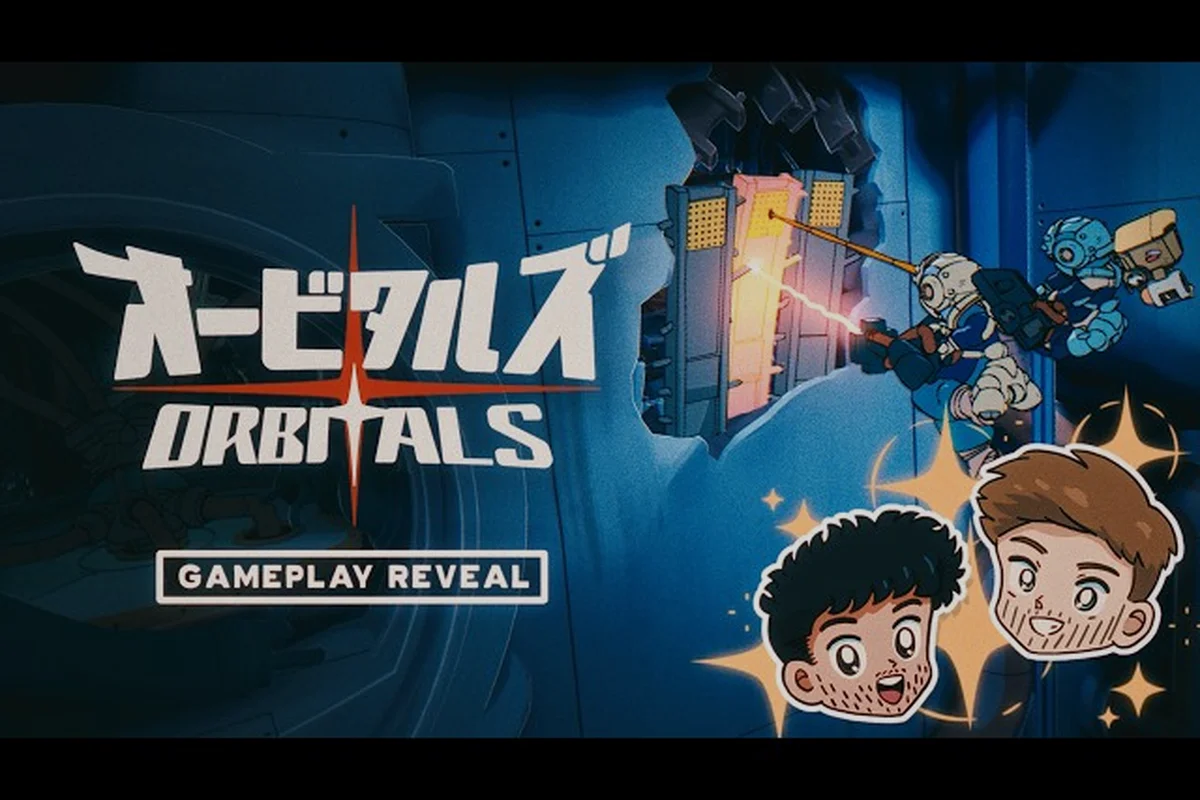
Orbitals is a 2-player co-op puzzle adventure from Shapefarm, and every Orbitals playable character is built around cooperation rather than solo heroics. Maki and Omura cannot progress alone because the Storm Wall forces them to split tasks, hand off gadgets, and trust each other with timing windows. Choosing the right character in Orbitals on the Nintendo eShop means understanding how their toolkits complement each other, and this Orbitals character guide breaks down both options so you can decide who suits your playstyle before launch day.
Who Is Maki in Orbitals: The Agile Pathfinder
Maki is one of the two Orbitals playable characters and serves as the pathfinder of the duo. Her personality is curious and restless, which shapes how she interacts with every puzzle, and her physical build favors speed, reach, and verticality over brute force. According to the official Orbitals website, Maki and Omura are space explorers who must outsmart the Storm Wall, and that dynamic directly informs how her ability kit was designed for the September 2026 launch.
Maki's Core Identity and Personality
Maki's identity centers on scouting ahead, taking risks, and pulling the duo out of tight spots. She speaks quickly, acts on instinct, and pushes into unknown corridors before Omura can finish scanning them. This personality translates into gameplay because her gadgets reward players who move first and ask questions later, while Omura's kit rewards the opposite instinct: patience, observation, and setup. When you boot up an Orbitals Maki guide in your head, think of her as the trigger finger and the leap of faith, because the game punishes hesitation less when you are playing her.
The pair's bond is also a key part of her identity, and players who want a deeper breakdown of the duo's shared history can read the story of Maki and Omura for narrative context. Mechanically, however, Maki is the one who gets the duo into the next room, and Omura is the one who makes that room solvable.
Maki's Abilities and Tools at a Glance
Maki's toolset focuses on Mobility, Reach, and Reconnaissance, the three pillars of her design. Her grappling hook lets her swing across gaps and climb vertical shafts that Omura cannot easily access, and her scanner highlights interactive objects at range so the duo can plan a route before committing. Below is a quick reference table for her core kit based on the developer's pre-release materials and community previews.
| Ability | Primary Use | Co-op Synergy |
|---|---|---|
| Grappling Hook | Crossing gaps, climbing shafts | Creates anchor points Omura can latch onto later |
| Pulse Scanner | Highlighting switch ranges and hidden panels | Reduces Omura's setup time on complex rooms |
| Quick Dash | Short-range repositioning and dodging | Lets Maki trigger hazards without dragging Omura into them |
| Signal Flare | Marking objectives for the partner | Wakes up Omura's sensor grid in low-visibility areas |
Players who want a closer look at how Maki compares with Omura on a per-ability basis can check the broader Orbitals characters list entry, which catalogs the full duo alongside their gear progression.
How to Get the Most Out of Playing Maki
Maki shines when the player behind her is comfortable taking initiative. Because her dash and grapple have short cooldowns, she can chain movement options to reach areas the puzzle expects only one player to access, and that pressure opens windows for Omura to solve the actual mechanism. Beginners often make the mistake of treating Maki like a generic action character, but the Orbitals Maki guide mindset is to use her speed to scout first, then call out positions with the signal flare so Omura can deploy heavier tools. In practice, the best Maki players are loud communicators, because her kit literally hands the partner information for free.
Who Is Omura in Orbitals: The Methodical Builder
Omura is the second of the two Orbitals playable characters and the structural counterweight to Maki. Where Maki runs ahead, Omura measures twice, and where Maki reacts, Omura plans. The Kepler Interactive publisher page describes the duo as explorers whose "brains, heart, and unyielding resolve" open the path forward, and Omura embodies the brain half of that equation. Players picking up an Orbitals Omura guide will quickly notice that her kit is heavier, slower, and more deliberate than Maki's, but it is also what makes most late-game rooms possible at all.
Omura's Core Identity and Personality
Omura is patient, analytical, and quietly confident. She does not panic when the Storm Wall advances because she trusts the data her tools feed her, and she is the one who usually notices patterns the duo has seen two rooms earlier. Her personality is reflected in her gameplay because her abilities reward sequencing, timing, and preparation rather than reflexes. If Maki is the duo's hands, Omura is the duo's head, and that division of labor is the foundation of the game's asymmetrical design.
This complementary dynamic is one of the reasons Orbitals' asymmetrical co-op is such a strong hook, and a detailed look at the personality split lives in the Orbitals who does what breakdown. The short version is simple: Maki gets you there, Omura makes it work.
Omura's Abilities and Tools at a Glance
Omura's toolset is built around Construction, Activation, and Stabilization, which makes her the half of the duo that actually finishes the puzzle. Her deployable energy bridge can span gaps Maki's grappling hook cannot reach, and her field generator projects a temporary safe zone that blocks Storm Wall damage. Below is a reference table for her core kit based on official previews and community hands-on reports.
| Ability | Primary Use | Co-op Synergy |
|---|---|---|
| Energy Bridge | Creating walkable platforms across wide gaps | Gives Maki a safe path to trigger distant switches |
| Field Generator | Projecting a safe zone against the Storm Wall | Buys time for Maki to scout a hazard-heavy corridor |
| Resonance Tuner | Aligning two or more emitters to unlock doors | Requires Maki to hold a switch while Omura tunes |
| Anchor Pulse | Marking a return point and stabilizing the path | Lets Maki reset her grappling line without losing progress |
Players interested in how Omura's tools evolved during development can also browse the Orbitals Maki character entry for a side-by-side comparison sheet.
How to Get the Most Out of Playing Omura
Omura rewards players who plan three moves ahead. Her resonance tuner in particular requires Omura to read the room, place emitters correctly, and wait for Maki to hold a switch at the right moment, and rushing that sequence is the most common cause of failed puzzles. A good Orbitals Omura guide mindset is to default to setup: scan, place, confirm, then let Maki trigger, because her kit is built to be the partner's safety net. Players who try to play Omura like a faster Maki will usually stall the run, but players who lean into her methodical rhythm will find late-game rooms much more forgiving.
Orbitals Character Comparison: Maki vs Omura
Because every Orbitals playable character in the base roster is asymmetrical, the real question is not which one is stronger but which one fits how you like to play. The table below compares Maki and Omura across the dimensions that matter most during a co-op run, based on information confirmed in the Orbitals Wikipedia entry and pre-release developer commentary.
| Dimension | Maki | Omura |
|---|---|---|
| Role | Scout and trigger | Build and stabilize |
| Strengths | Mobility, reconnaissance, fast reactions | Sequencing, puzzle solving, hazard control |
| Weaknesses | Fragile in prolonged Storm Wall exposure | Slower movement, less flexibility on solo puzzles |
| Best For | Players who like to act first | Players who like to plan first |
| Learning Curve | Easier to start, harder to master | Harder to start, easier to master |
| Co-op Dependency | High — needs Omura to solve most rooms | High — needs Maki to reach most rooms |
The takeaway from this Orbitals character guide comparison is that the two characters are designed to feel like a single distributed system, and the co-op run only clicks when both halves are doing their job. Picking based on personality usually matters more than picking based on perceived power, because the game's design philosophy is that Maki without Omura stalls just as often as Omura without Maki.
Why Asymmetry Matters in Orbitals
Asymmetrical co-op is Orbitals' defining design choice, and it is what makes the Orbitals playable characters feel distinct from a typical two-player puzzle game. In many co-op titles, both characters have access to the same toolkit and the difficulty comes from coordinating execution. In Orbitals, the two characters literally cannot do the same things, because Maki's grappling hook covers distance, while Omura's energy bridge creates surfaces, and neither can replace the other. According to the official eShop listing, the game is rated for fantasy violence, animated blood, and mild language, which signals that the difficulty is meant to come from puzzle design and storm pressure rather than combat punishment.
This asymmetry also extends to the duo's narrative roles, and the Orbitals characters inspired by entry explores how the developers drew from classic adventure duos to shape that contrast. The result is a co-op system where the partner you choose is the partner you rely on.
When to Switch Characters Mid-Run
Although the base launch focuses on Maki and Omura, the developers have hinted at additional playable Orbitals characters in future updates, which means the right pick today may not be the right pick tomorrow. Players who favor a hybrid playstyle should pay attention to update notes and the official Shapefarm channels, because new characters will almost certainly change the optimal pairings. For now, the recommendation is to play the Orbitals Maki guide path first if you are brand new to co-op puzzle games, then switch to Omura on a second run to see the same rooms from the other side, because that rotation gives the deepest mechanical understanding of the title.
Best Co-op Strategies for the Orbitals Playable Characters
Because the Orbitals playable characters are built around mutual dependency, the best strategies are the ones that treat the duo as a single distributed system rather than two independent players. The tips below are drawn from the official pre-release demo, community hands-on reports, and developer interviews, and they apply to both Maki and Omura regardless of which character you personally control.
Communication Beats Raw Skill
Maki and Omura win or lose as a pair, so callouts matter more than mechanical execution. Maki should always announce when she is about to dash past a hazard, because Omura may need to drop a field generator at the same instant, and Omura should warn Maki before she repositions the energy bridge, because a sudden surface change can break a grapple chain. Players who default to silence will find even easy rooms frustrating, while players who narrate their intent will find hard rooms solvable.
Match Your Character to Your Partner's Habits
If your partner tends to rush, lean into Omura's stability toolkit, because her field generator and anchor pulse can catch mistakes a faster player would otherwise make. If your partner tends to overthink, lean into Maki's mobility, because her dash and grapple can break analysis paralysis by forcing a direction. The Orbitals character guide principle here is simple: the character you pick is half the puzzle, and the other half is the chemistry you build with whoever is holding the other controller.
Use the Signal Flare and Anchor Pulse as a Shared Map
Maki's signal flare and Omura's anchor pulse are the only two tools in the base game that explicitly transfer information between players, so use them as a shared map layer rather than personal tools. Drop a flare on every objective the moment you see it, and pulse an anchor at every safe return point, because your partner cannot see what you are looking at unless you mark it. Community testers report that runs where both players commit to marking clear up roughly 30% faster on multi-stage rooms, because the duo stops re-exploring corridors the other player already cleared.
Choosing Your Orbitals Playable Character for the First Run
Picking the right Orbitals playable character for your first run is more about honesty than preference, because the game punishes mismatch more than it rewards enthusiasm. If you are a new player, the honest answer is to try both, but the structured answer is to start with whichever role mirrors how you already play other co-op games. The table below offers a quick decision matrix for first-time players based on the most common co-op playstyles.
| If You Usually... | Pick | Why |
|---|---|---|
| Rush objectives in co-op shooters | Maki | Her mobility matches your instinct, and the game will teach you Omura's patience over time |
| Hang back and support teammates | Omura | Her builder kit rewards your natural positioning, and Maki's scouting will free you to plan |
| Prefer to switch roles each mission | Either, then swap on run two | Both characters teach you the room layouts from a different angle |
| Have never played a co-op puzzle game | Maki first | Easier onboarding, and the demo's Friend's Pass lets you try Omura without owning the second copy |
Whichever you pick, the demo's Global Friend's Pass system means you only need one copy of the game to try both Orbitals playable characters before launch, and the official website confirms that the pass app is free. That makes the decision reversible, so treat the first run as a learning pass rather than a final commitment.
Frequently Asked Questions
How many Orbitals playable characters are there at launch?
There are two Orbitals playable characters at launch: Maki and Omura. Both are required to clear the campaign because the game's asymmetrical co-op design routes key puzzle mechanics through one character or the other, and the official publisher page confirms the duo is the only playable roster on day one.
Who is Maki in Orbitals?
Maki is the agile pathfinder half of the Orbitals playable characters, and her role is to scout, grapple, and trigger hazards ahead of Omura. She is fast, curious, and built around mobility tools like the grappling hook and quick dash, which means she opens routes that Omura then stabilizes with heavier gear.
Who is Omura in Orbitals?
Omura is the methodical builder half of the Orbitals playable characters, and her role is to construct, sequence, and protect the duo from the Storm Wall. She is patient and analytical, and her energy bridge, field generator, and resonance tuner are the tools that actually close most puzzles once Maki has cleared the path.
Do I need to play with a friend to enjoy the game?
Yes, Orbitals is designed as a 2-player co-op experience, which is why every puzzle assumes both Orbitals playable characters are active. Solo play is not supported in the base game, although the Global Friend's Pass app lets you pair with another player online even if they do not own a copy.
Which Orbitals character is better for beginners?
Maki is the easier of the two Orbitals playable characters for beginners because her mobility tools are forgiving and her mistakes are recoverable. Omura has a steeper opening curve because her sequencing tools punish early-game impatience, but both characters are designed to teach the player through the campaign rather than gate content behind skill.